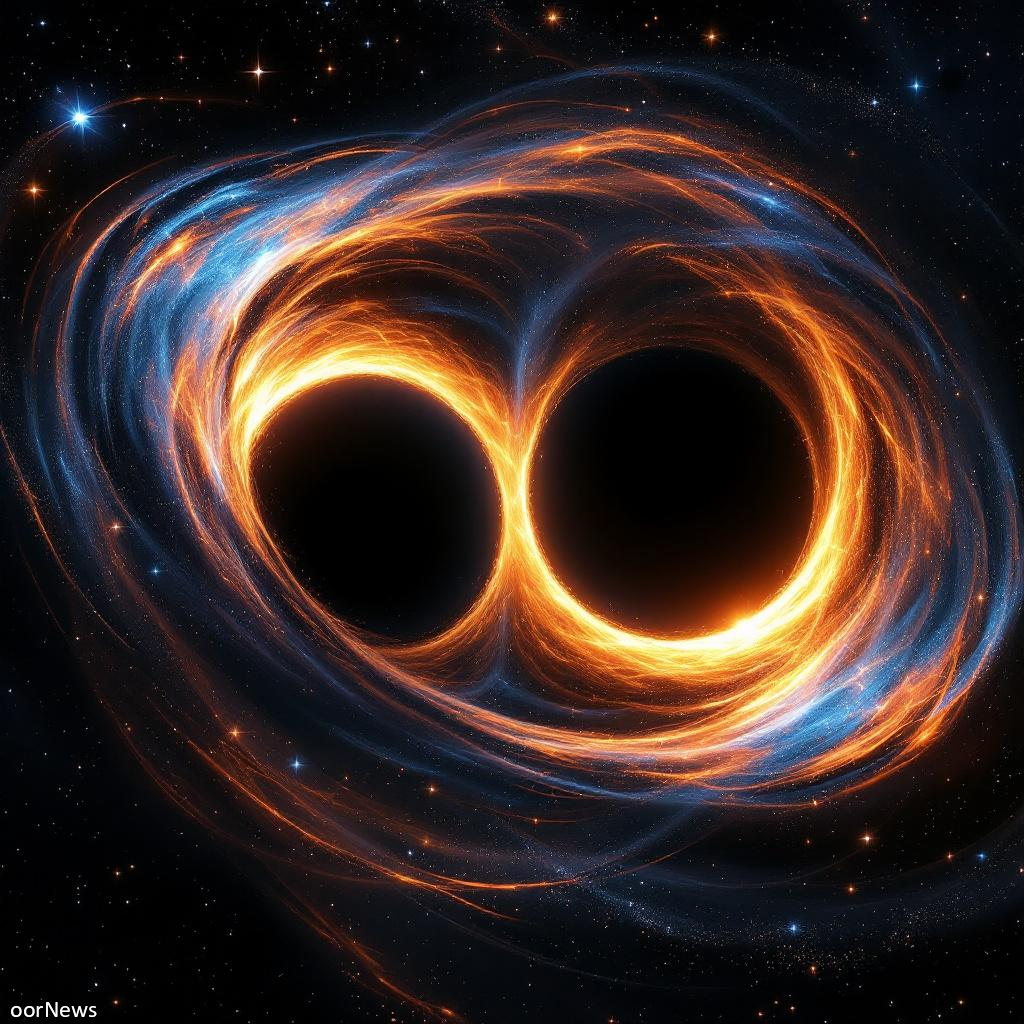
A record-brakkin black hole rammy his bin spotted, shawin e lairgest black holes ivver detectit throu gravitational waves. E event, coded GW231123, wis observed on November 23, 2023, by the LIGO-Virgo-KAGRA collaboration eesin US-based LIGO observatories.
E final black hole formed wyes ower 225 times e mass o oor Sun. Iss unprecedentit size challenges existin ideas aboot foo black holes form. E twa mergin black holes measured aboot 100 an 140 solar masses, spinnin get faist an hintin at a complex past, aiblins involvin earlier mergers o smaaer black holes.
University o Glesga resairchers played a key role in analysin e signal an fittin e data tae models. Dr Daniel Williams, leadin e data analysis team, noted, “Iss excitin event is een o mony fit we’ve analysed fae data collected in 2023 an early 2024… it’s an excellent example o foo we’re still diskiverin nyow an unexpectit hings aboot black holes an ultimately aboot foo stars evolve.”
E finnins will be shared at e GR-Amaldi meetin — e warld’s lairgest conference on gravitational waves — takkin place in Glesga fae July 14 tae 18, 2025. Iss event comes as e scientific community approaches e 10th anniversary o the first gravitational wave detection.
Experts say it will tak years tae fully unnerstaun iss complex signal an its meanin for cosmic history. For e noo, e discovery merks a significant stap in gravitational wave astronomy, pushin technology an theories tae nyow hechts.