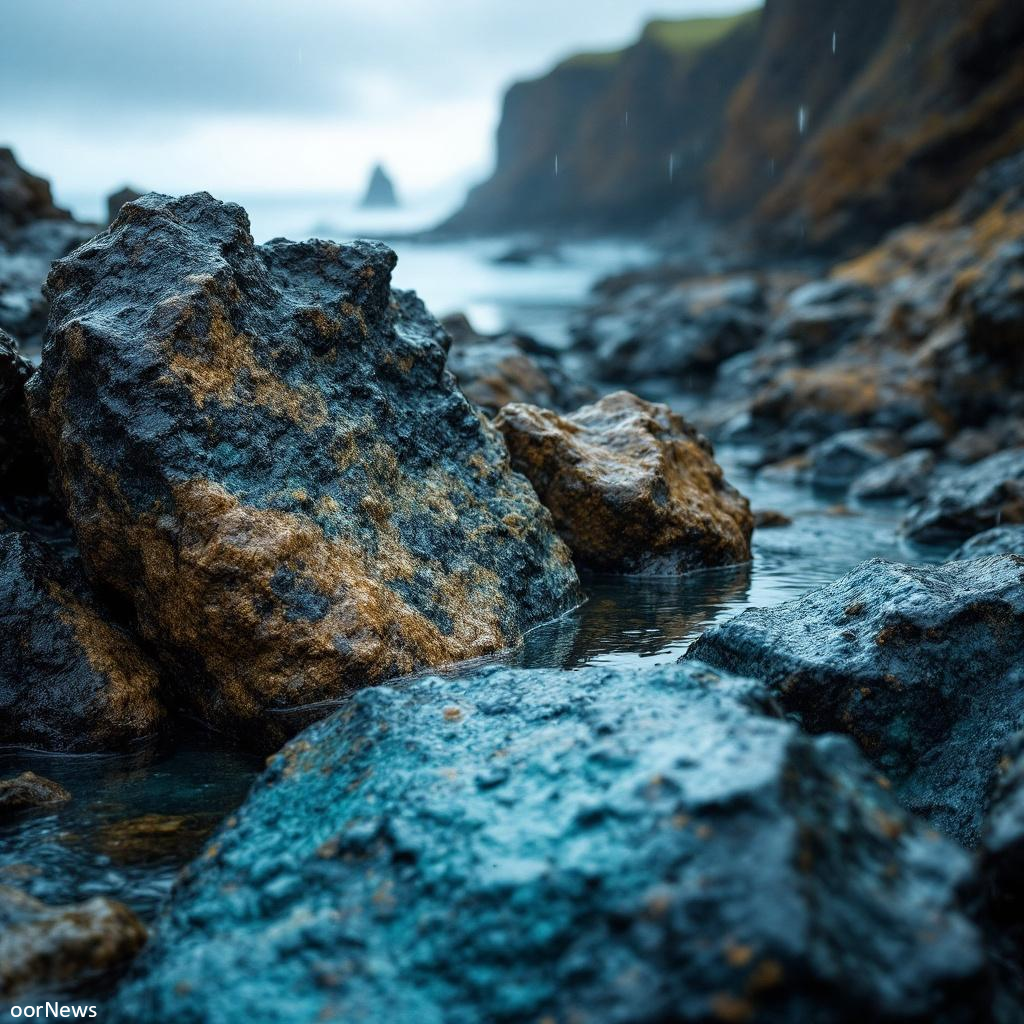
Rocks fae the coastal village o Portsoy in Aiberdeenshire are playin a key role in helpin scientists develop tuils for tae study the moon’s surface. The University o Aiberdeen is yaisin a rare mix o rock types fund close thegither in Portsoy herbour tae copy the muin’s geology on Yird.
The muin’s core is made o pyroxenite, while its ooter regions contain maistly anorthosite an gabbro. Past meteor strikes likely pushed pyroxenite tae the surface. Thae three rocks are aw fund near yin anither in Portsoy, giein a unique spot for resairchers tae test new instruments designed for astronauts.
Professor John Parnell, leadin the project, said, “Exploration o the muin focuses on twa key areas – evidence o traces o watter an the potential for minerals includin nickel. Portsoy is in a select position tae help us develop equipment for tae test for that an gain the unnerstaunin we need here on Yird.”
The gabbro rock in Portsoy hauds a mineral cried olivine, whit, whan it meets watter, chynges intae a colourfu mineral cried serpentine. Scientists are warkin on tuils that can check for serpentine inside olivine for tae shaw if watter wis aince present—an important clue for muin resairchers.
Dr Joe Armstrong explained, “Fowk visitin Portsoy will be faimiliar wi ‘Portsoy marble’ historically quarried tae the wast o the toon an aften picked up as a souvenir. This ‘marble’ is actually the metamorphic rock serpentinite, composed predominantly o the serpentine group minerals we are interested in. This is key for tae unlock unnerstaunin o the muin’s potential resoorces.”
The team at Aiberdeen is teamin up wi the universities o Leicester an Madrid, the British an European Space Agencies, an private firms ower the UK an owerseas for tae advance this wark.
For decades, Portsoy’s rocks hae bin a lairnin tool. Noo, thay are helpin tae shape the future o space exploration.