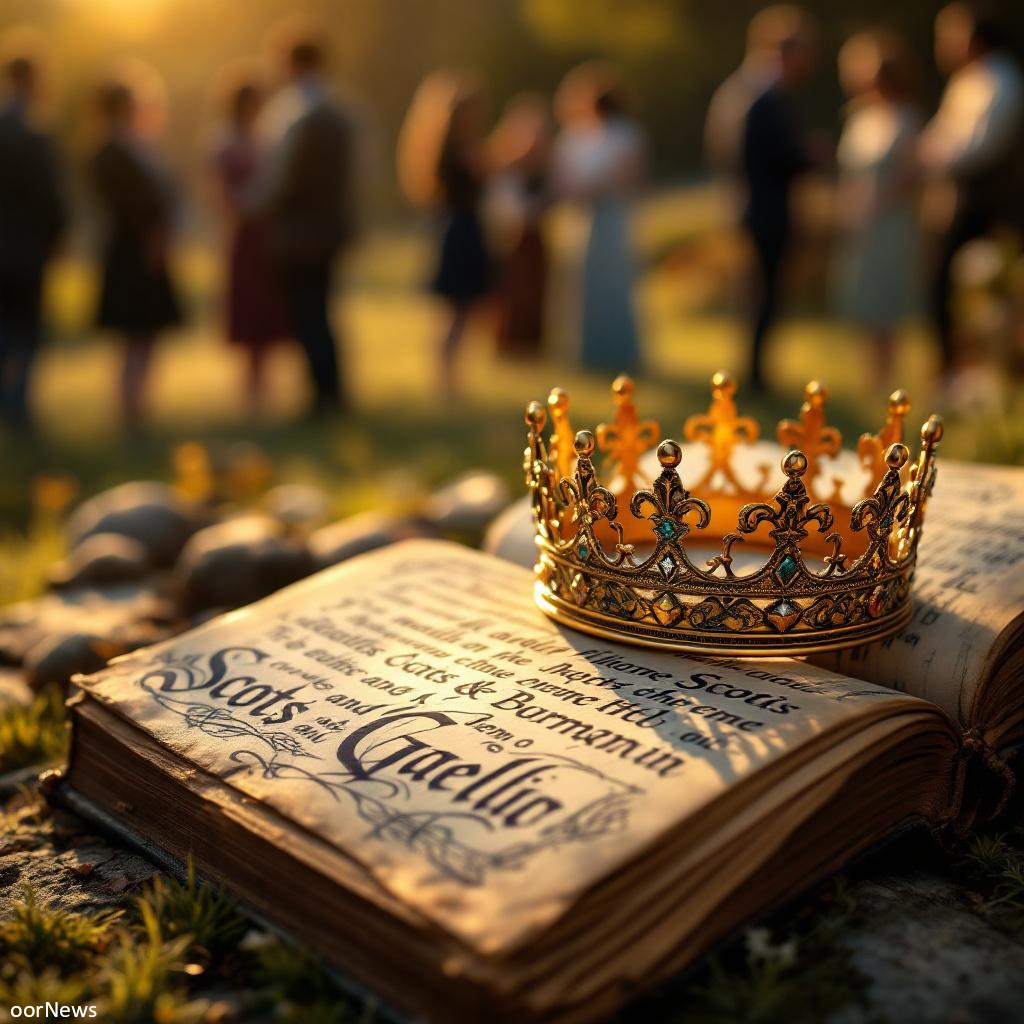
In an act o profoond importance for Scottish culture, e Scottish Leids Bill his noo becam laa follaein Royal Assent fae King Charles III. Iss historic legislation gies Scots an Gaelic offeecial status for e first time, cementin thair nyow staunin in Scotland an unnerlinin e deep historical an modren ties atween e Croon an e Scots leid.
E Croon’s connection tae Scots is lang estaiblished; e Stuart kings—direct ancestors o King Charles III—were native spikkers, an for centuries Scots wis e leid o Scottish royalty an aristocracy. Iss rich link wis gien a distinctly modren twist fan e King recently attended a service far leid advocate Gordon Hay read fae his acclaimed Doric New Testament. Mr. Hay’s subsequent MBE for his wirk promotin Doric has bin widely seen as a personal royal nod tae the leid an its spikkers.
For e 1.5 million fowk aat spik Scots, iss nyow laa offers pouerfu validation, challengin past perceptions an siccarin e leid’s future in education, govrenment, an community life. E legislation nae ainly affirms e cultural importance o Scots an Gaelic but reflects Scotland’s commitment tae nurturin an revitalisin its unique linguistic heirskip.
E royal approval has resonated widely ower e political spectrum. For some, it symbolises constitutional unity an shared heirskip; for ither fowk, it pynts oot Scotland’s distinct national identity an sovereign history. Ower aa, it reinforces e Scottish Pairlament’s mandate tae champion e nation’s rich cultural landscape.
E Royal Assent for e Scottish Leids Act merks a remerkable convergence o modren legislation an deep-ruited history. By officially recognisin Scots an Gaelic, Scotland is takin a definitive stap tae siccarin a vibrant future for its linguistic traditions—fae local communities tae the heichest levels o state.