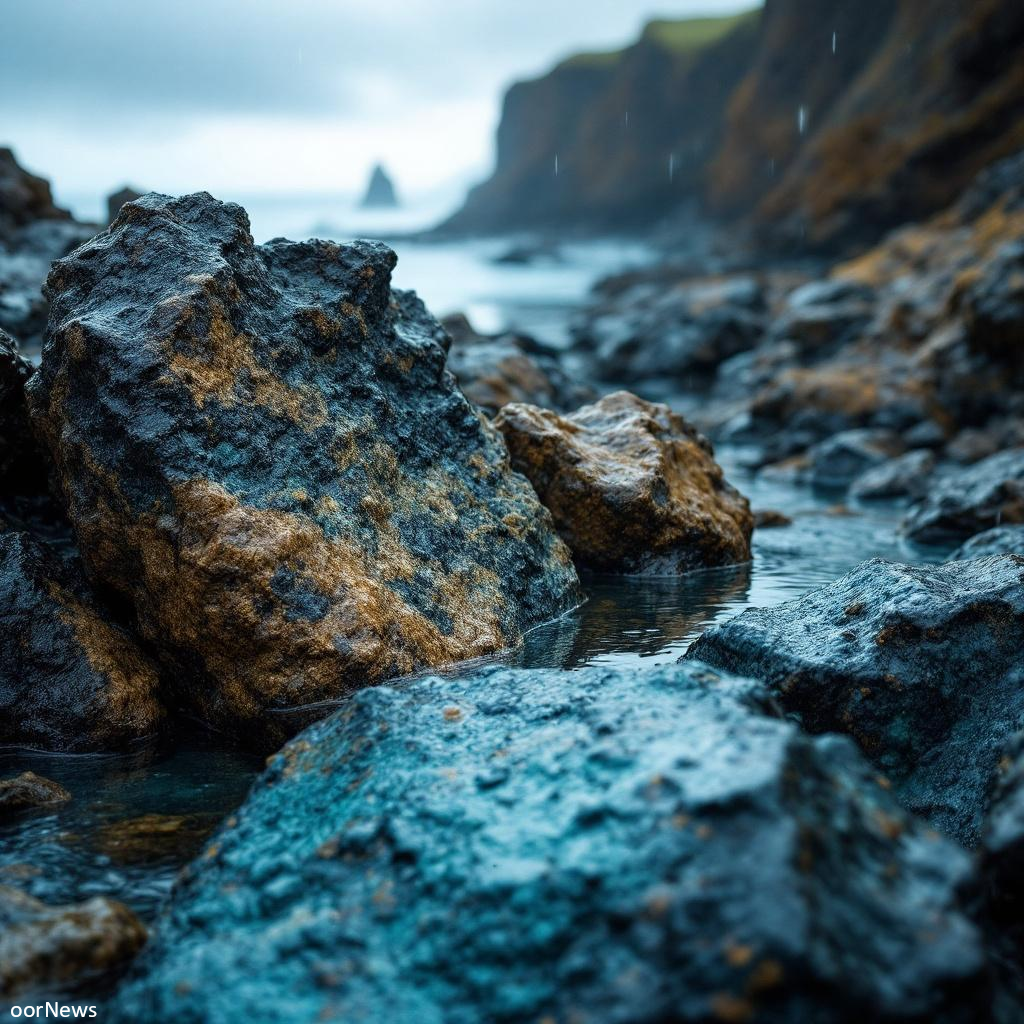
Rocks from the coastal village of Portsoy in Aberdeenshire are playing a key role in helping scientists develop tools to study the moon’s surface. The University of Aberdeen is using a rare mix of rock types found close together in Portsoy harbour to copy the moon’s geology on Earth.
The moon’s core is made of pyroxenite, while its outer regions contain mostly anorthosite and gabbro. Past meteor strikes likely pushed pyroxenite to the surface. These three rocks are all found near each other in Portsoy, providing a unique spot for researchers to test new instruments designed for astronauts.
Professor John Parnell, leading the project, said, “Exploration of the moon focuses on two key areas – evidence of traces of water and the potential for minerals including nickel. Portsoy is in a select position to help us develop equipment to test for that and gain the understanding we need here on Earth.”
The gabbro rock in Portsoy holds a mineral called olivine, which, when it meets water, changes into a colourful mineral named serpentine. Scientists are working on tools that can check for serpentine inside olivine to show if water was once present—an important clue for moon researchers.
Dr Joe Armstrong explained, “People visiting Portsoy will be familiar with ‘Portsoy marble’ historically quarried to the west of the town and often picked up as a souvenir. This ‘marble’ is actually the metamorphic rock serpentinite, composed predominantly of the serpentine group minerals we are interested in. This is key to unlocking understanding of the moon’s potential resources.”
The team at Aberdeen is teaming up with the universities of Leicester and Madrid, the British and European Space Agencies, and private firms across the UK and overseas to advance this work.
For decades, Portsoy’s rocks have been a teaching tool. Now, they are helping to shape the future of space exploration.