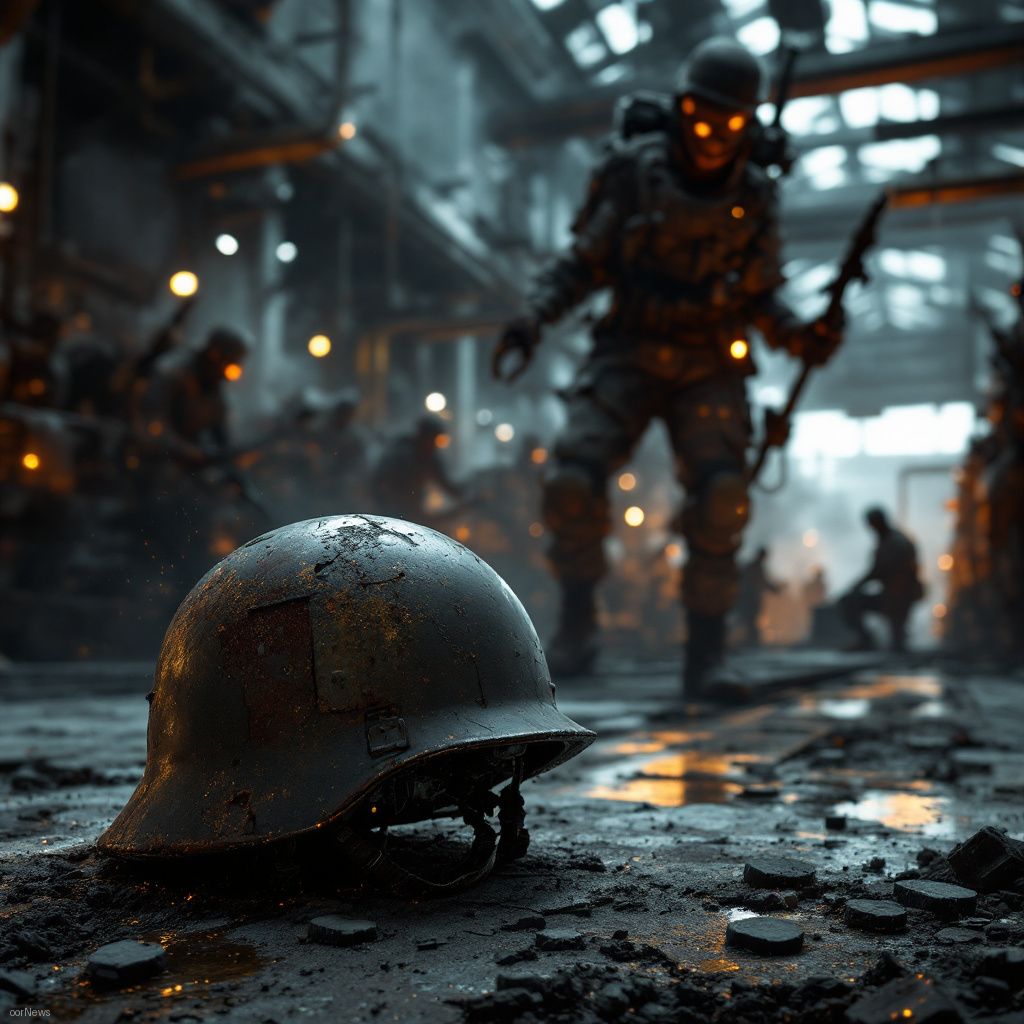
A quiet but relentless drumbeat is growing louder across the globe. It is the sound of factories churning out advanced weaponry, of national budgets diverting billions from public services to defense, and of political rhetoric sharpening into adversarial narratives. The world is rearming at a pace not seen in decades, with military spending soaring past an astonishing $2.7 trillion. History offers a chilling warning: this is what the prelude to a world war looks like.
The New Arms Race and the Fear Machine
From the plains of Eastern Europe to the waters of the South China Sea, a global arms race is accelerating. Spurred by the war in Ukraine, European nations are rearming with urgency. Germany has doubled its defense budget, Poland has committed 4% of its GDP, and even historically neutral nations are joining military alliances. In Asia, China’s rapid military expansion has triggered record defense spending in Japan, Taiwan, and Australia. This is the “security dilemma” in action—a toxic feedback loop where one nation’s defensive buildup is perceived as an offensive threat by its rival, compelling them to arm themselves in turn. It’s a machine that runs on fear, and business is booming.
But what is this all for? While the specifics vary, the conflict is being framed on both sides as an existential struggle for the future.
A War of Words: The Propaganda We’re All Fed
For those living in the West, the fight is to defend the “rules-based international order” and democratic values against rising authoritarianism. It is a narrative of freedom versus oppression. For those in state-led nations like China and Russia, the narrative is one of national sovereignty and resistance. They see the West’s promotion of democracy as a pretext for interference and a system designed to siphon global wealth. They argue their model provides stability and economic progress, and they are building a military to protect it from what they see as a predatory and hypocritical world order.
Both narratives are potent. Both are used to convince ordinary people that the immense sacrifice required for military escalation is not only justified but necessary for their very survival. And both obscure a simple truth: the average person in London, Moscow, or Beijing shares the same fundamental desire for peace and prosperity for their families.
The Ridiculous Price of Destruction
The greatest absurdity of this buildup is its opportunity cost. War and the preparation for it are a tax on all of humanity, robbing us of a better future. Consider this: the cost of a single modern fighter jet could fund the salaries of thousands of teachers or build several new hospitals. The money spent on one cruise missile—a weapon designed to be destroyed upon use—could provide clean drinking water for entire communities for a year.
The trillions we spend annually on our collective war machine would be more than enough to tackle the truly existential threats we face, such as climate change, pandemics, and extreme poverty. We are choosing to invest in the instruments of our own potential destruction, while the tools for our collective salvation lie unfunded. We are building self-destroying munitions instead of life-affirming infrastructure like schools, railways, and clean energy grids.
Escaping Our Barbaric Past
It is easy to feel despair, to believe that war is just an inevitable part of the human condition. But it is not. History shows that humanity is capable of profound moral progress. Practices once considered permanent fixtures of society—from slavery and ritual human sacrifice to dueling and the divine right of kings—are now seen as barbaric relics of an unenlightened past. We abolished them because we collectively decided we could be better.
War is no different. It is a failure of diplomacy, a failure of imagination, and a failure of humanity. A future without war is possible. It requires us to reject the simplistic propaganda we are fed and to demand a new kind of security—one based on cooperation, not confrontation. It requires us to have the courage to see the world not as an arena for zero-sum competition, but as a shared home with shared problems.
Just as we now look back with horror at the accepted brutality of the past, future generations may one day look back at our time and ask how we could ever have thought that the industrial-scale slaughter of our own kind was a legitimate tool of politics. We can choose to be the generation that makes that future possible.