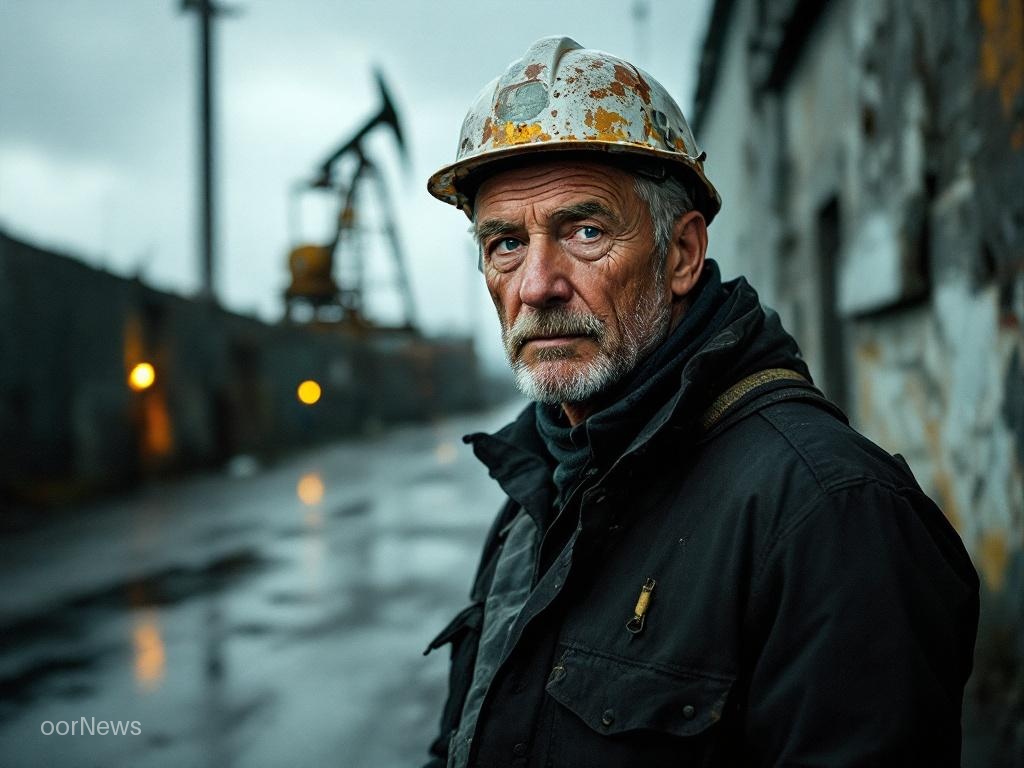
The road to 2045 is paved with more than just good intentions; it requires a workforce that Scotland already possesses but may be failing to prepare. A landmark report from the independent Expert Advisory Group on Migration and Population, titled Meeting Scotland’s Workforce Needs for a Transition to Net Zero, suggests a future for our industries that is both more hopeful and more challenging than recent political headlines suggest.
While recent official messaging has focused on the limitations of UK immigration policy, the experts behind the report have uncovered a massive domestic opportunity. The data indicates that Scotland is not facing a simple shortage of people, but a significant challenge in how we redeploy the talent we already have.
The 90% Opportunity
For decades, Scotland’s energy sector has been the backbone of the economy, and the report brings a startling piece of good news for those currently working in oil and gas. Research shows that up to 90% of the current energy workforce possesses skills with medium to high transferability to the green sector. This means that the transition is not an “out with the old, in with the new” scenario, but rather an evolution of existing Scottish expertise.
However, the divergence between the report and the official press narrative is notable. While the Scottish Government’s press office has highlighted a “Green Skills Visa” as a primary solution, the report itself warns against treating international migration as a “knee-jerk response” to shortages. Instead, it advocates for migration as a “strategic mitigation” tool to be used only alongside deep, sustained investment in local workers.
Currently, UK employers invest less than half the EU average in training, suggesting the real bottleneck is a lack of domestic investment rather than a lack of visas.
The Hidden Economic Footprint
The shift to renewables also brings a shift in how our economy functions. Unlike traditional gas or nuclear infrastructure, which are highly centralised and energy-dense, wind and solar are “spatially diffuse”. This means they require a significantly larger volume of workers for ongoing maintenance and construction across a wider area.
While this creates a high volume of local jobs, it also changes the “productivity” map of the nation. More people are required to maintain the energy grid than ever before, which places a new kind of demand on our labour market.
Furthermore, because these projects are spread across rural Scotland, they require massive investments in new housing and transport—infrastructure that carries its own carbon cost and social impact often missing from the Net Zero balance sheet.
A “Just Transition” for the North East
The report is most candid when discussing the risks to the North East and the Highlands. While 43% of the UK’s oil and gas jobs are currently in Scotland, only 11% of green job vacancies appeared in the North East between 2019 and 2022. This creates a “spatial mismatch” that could lead to a cliff-edge for communities like Aberdeen if green jobs do not emerge in the same location at the same pace as oil jobs decline.
In our rural heartlands, the barrier to a green workforce is often not a lack of willing workers, but a critical shortage of basic infrastructure. The experts warn that without fixing the housing and transport crises, we risk a culture of “learning to leave,” where our youth are forced out of their own communities to find work.
Beyond Tribalism
At oorNews, we believe the Net Zero transition is too important to be used as a political football. Constructive realism requires us to look past the “moaning” about reserved powers and focus on the levers we already hold. This means:
- Prioritising Indigenous Talent: Focusing on upskilling the 90,000 skilled Scots who have powered this country for fifty years.
- Scaling the Skills Passport: Moving beyond small pilot schemes to give every energy worker a clear, funded path into renewables.
- Fixing Local Infrastructure: Investing in the homes and buses that allow a “Just Transition” to be a reality for rural Scots, not just a slogan.
The report serves as a vital reminder that if we prioritise a “migration bridge” over domestic investment, we risk a transition that fails our local communities. It is time for a policy that puts the people of Scotland at the heart of the green revolution.