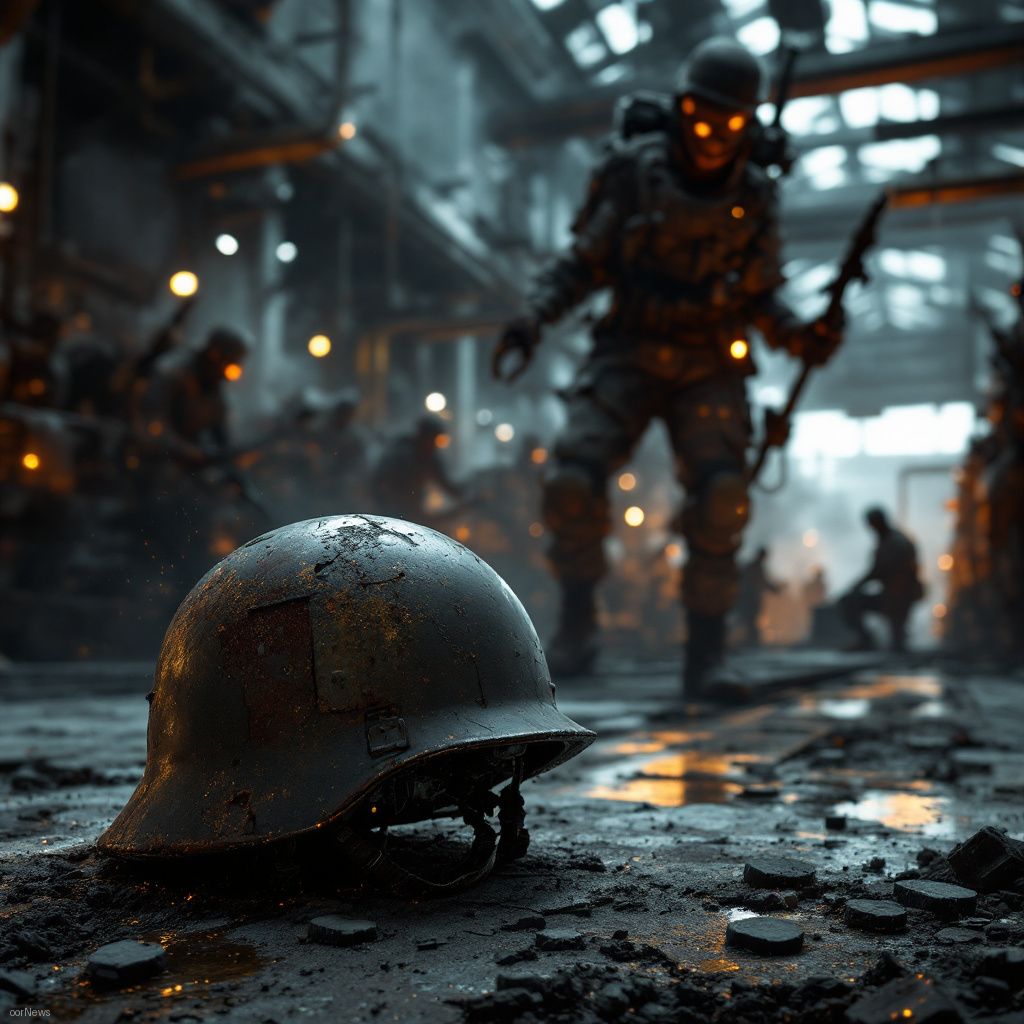
A quate bit relentless drumbeat is growein looder ower e warld. It’s e soon o factories kirnin oot advanced wappinry, o national budgets divertin billions fae public services tae defence, an o political rhetoric shairpenin intil adversarial haiverins. E warld is re-airmin at a pace nae seen in decades, wi military spennin soarin past a dumfoonerin $2.7 trillion. History gies a chillin waarnin: iss is fit e prelude til a warld war leuks like.
E Nyow Airms Race an e War Machine
Fae the plains o Eastren Europe til e watters o the Sooth China Sea, a global airms race is acceleratin. Spurred by the war in Ukraine, European nations are re-airmin wi urgency. Germany his doobelt its defence budget, Poland his committed 4% o its GDP, an even historically neutral nations are jynin military alliances. In Asia, China’s rapid military expansion his triggered record defence spennin in Japan, Taiwan, an Australia. Iss is e “security dilemma” in action—a toxic feedback loop far ae nation’s defensive biggin-up is seen as an offensive threit by its rival, garrin em tae airms theirsels in turn. It’s a machine aat rins on fear, an business is boomin.
But fit is iss aa for? Fyle e specifics vary, e conflict is bein framed on baith sides as an existential fecht for e future.
A War o Wirds: E Propaganda We’re Aa Gien
For fowk bidin in e Wast, e fecht is tae defend e “rules-based international order” an democratic values agin risin authoritarianism. It is a narrative o freedom versus oppression. For fowk in state-led nations like China an Russia, e narrative is een o national sovereignty an resistance. Thay see the Wast’s promotion o democracy as a pretext for interference an a system designed for tae siphon global walth. Thay argue thair model gies stability an economic forderin, an thay are biggin a military tae protect it fae fit thay see as a predatory an hypocritical warld order.
Baith narratives are pouerfu. Baith are eesed tae convince ordinar fowk aat e immense sacrifice required for military escalation is nae ainly justified but necessar for thair verra survival. An baith obscure a simple truth: e average chiel in Lunnon, Moscow, or Beijing shares e same fundamental desire for peace an prosperity for thair faimilies.
E Ridiculous Price o Destruction
E mucklest absurdity o iss biggin-up is its opportunity cost. War an e preparation for it are a tax on aa o humanity, stealin a better future fae us. Consider iss: e cost o a single modren fechter jet cwid fund e salaries o thoosands o teachers or bigg a wheen o nyow hospitals. E siller spent on a cruise missile—a wappin designed tae be destroyed upon eese—cwid gie clean drinkin watter for hale communities for a year.
E trillions we spen ilka yaer on wir collective war machine wid be mair nor eneuch for tae tackle e truly existential threits we face, sic as climate chynge, pandemics, an extreme poverty. We are forced tae invest in e instruments o wir ain potential destruction, fyle e tuils for wir collective salvation bide unfunded. We are biggin sel-destroyin munitions insteid o life-affirmin infrastructure like skweels, railweys, an clean energy grids.
Escapin Oor Barbaric Past
It is easy tae feel despair, tae believe aat war is jist an inevitable pairt o the human condition. But it isna. History shaws aat humanity is capable o profoon moral progress. Practices eence thocht as permanent fixtures o society—fae slavery an ritual human sacrifice tae duellin an e divine richt o kings—are noo seen as barbaric relics o an unenlichtened past. We abolished em acause we collectively decided we cwid be better.
War is nae different. It is a failure o diplomacy, a failure o imagination, an a failure o humanity. A future ithoot war is possible. It gars us tae turn awa fae the simplistic propaganda we’re gien an tae speir for a nyow kin o security—een based on cooperation, nae confrontation. It gars us tae hae the courage tae see the warld nae as a battlegrun for zero-sum competition, but as a shared hame wi shared problems.
Jist as we leuk back wi horror at e accepted brutality o the past, future generations micht ae day leuk back at oor time an speir foo we cwid ivver hae thocht aat e industrial-scale slaachter o wir ain kin wis a legitimate tuil o politics. We can choose tae be the generation aat maks aat future possible.